
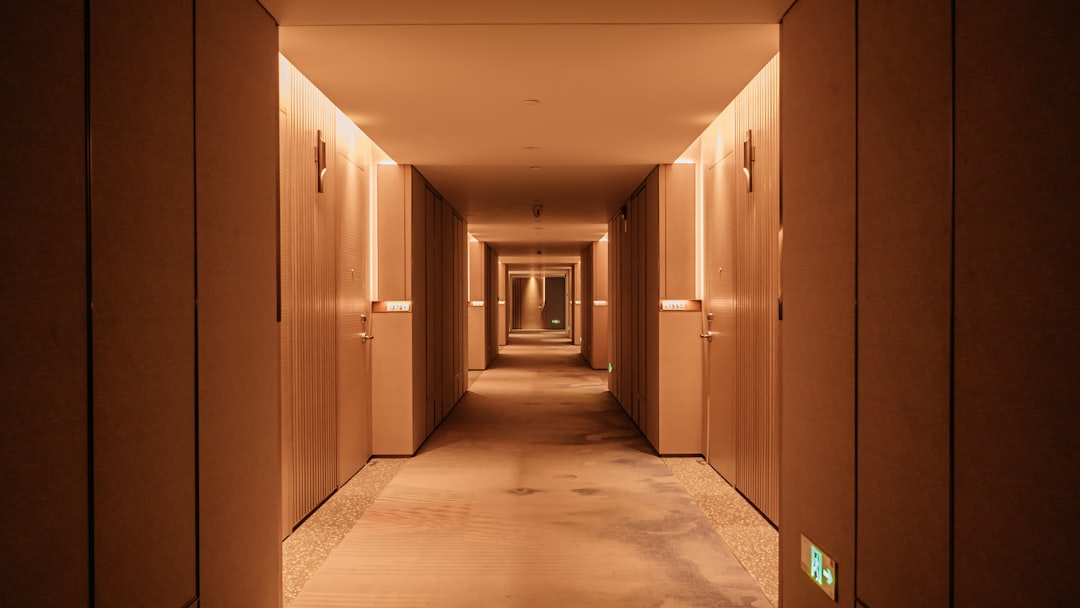
A hotel carpet takes more punishment in a week than a home carpet does in a year. Trolleys, luggage wheels, food spills, tracked-in rain from the lobby, it adds up fast, and it shows. The question is not whether your carpets need a professional clean. It is whether your service contract is set up to handle everything that hotel operations actually throw at it.
Most property managers find out about a contract gap at the worst possible moment: a red-wine spill on a banquet carpet the morning before an event, or a musty corridor that a guest has already photographed for a review. A contract that only covers scheduled deep cleans will not help you then.
Why this matters: A poorly scoped contract leaves your hotel exposed to reactive costs and reputational risk that a well-structured arrangement would have absorbed.
Highlights
- Hotel carpets need a mix of scheduled deep cleans and on-call spot treatment, not one or the other.
- Hot-water extraction removes around 96% of embedded soil, dust mites and odour with no chemical residue.
- Eco-friendly, pet- and child-safe solutions protect guests with sensitivities and help maintain indoor air quality.
- In-house IICRC- and CRI-certified technicians mean consistent, accountable work, not whoever a sub-contractor sends.
- Same-day and 24/7 emergency response keeps you covered when a spill or incident cannot wait for the next scheduled visit.
What a hotel carpet contract actually needs to cover
A solid contract does two things: it keeps the carpet in good condition day-to-day, and it gives you a clear escalation path when something goes wrong. Both matter. A contract built only around scheduled quarterly cleans ignores the reality of hotel operations.
Scheduled deep cleans
Hot-water extraction, what most people call steam cleaning, is the baseline for any hotel carpet programme. It reaches deep into the pile to lift the soil, dust mites and allergens that vacuuming leaves behind, and it leaves no chemical residue, which matters in a space where guests may be barefoot. For high-traffic areas like lobbies, lifts and corridors, quarterly is usually the minimum. Guestrooms, depending on occupancy, may need a clean every six months.
Any contract should specify:
- Which areas are covered and at what frequency
- The cleaning method (hot-water extraction, dry cleaning, or both, depending on the carpet)
- The products used, and whether they are certified safe for occupants
- Who carries out the work, and whether technicians are in-house or sub-contracted
Emergency and spot-treatment response
This is where many contracts are thin. A scheduled clean programme is not much use if a guest spills red wine on a ballroom carpet and your contractor cannot attend until next Tuesday. Your contract should state, in plain terms, what the response time is for emergency call-outs and whether 24/7 attendance is available.
Spot treatment and carpet stain removal are a distinct skill from a routine deep clean. The technician needs to identify the stain type, choose the right pre-treatment, and work quickly to stop the stain from setting. Ask your contractor directly: is emergency stain response included in the contract fee, or is it billed separately?
Coverage by area type
Hotel surfaces are not uniform. A lobby carpet is not the same as a guestroom carpet, a restaurant banquette, or a ballroom. A well-written contract maps the cleaning method to the surface:
|
Area |
Typical method |
Suggested frequency |
|---|---|---|
|
Lobby and corridors |
Hot-water extraction |
Every 3 months |
|
Guestrooms |
Hot-water extraction or dry clean |
Every 6 months |
|
Restaurant / banquet carpet |
Hot-water extraction |
Every 2–3 months, plus spot treatment |
|
Upholstered chairs and sofas |
Every 6–12 months |
|
|
Rugs (feature or Persian) |
As needed, off-site if required |
If your contractor offers a single method for every surface, that is a flag. Different fibres and constructions need different approaches, and a qualified technician will tell you so.
The certification and accountability questions to ask
For a commercial contract of any scale, the qualifications of the team doing the work are not a formality. They determine whether your carpets are cleaned correctly, whether warranties are maintained, and whether you have any recourse if something goes wrong.
Are the technicians certified?
The IICRC (Institute of Inspection, Cleaning and Restoration Certification) sets the international standard for cleaning and restoration professionals. A team working to IICRC standards follows documented methods, handles carpet fibres correctly, and understands drying protocols that prevent mould, a real risk in Singapore's humidity. Ask for evidence of certification, not just a claim.
We are IICRC- and CRI-certified, and our technicians are in-house. We do not sub-contract. That matters for a hotel, because it means the person who arrives at your property is accountable to us, trained by us, and known to us.
Is the work sub-contracted?
Sub-contracting is common in the cleaning industry and it is not automatically a problem, but it changes your risk profile. If the person cleaning your ballroom carpet is not directly employed by the company you have a contract with, you have less visibility into their training, their insurance, and the products they use. Ask the question before you sign.
What happens if something is damaged?
A carpet contract should include a clear clause on liability: what happens if a technician damages a carpet, over-wets a guestroom and causes secondary damage, or uses a product that bleaches or shrinks a fibre. Honest contractors will tell you about their insurance and their process for handling complaints. A contractor who is vague on this point is worth treating with caution.
When to review or renegotiate your contract
A service contract that made sense when you signed it may not fit your hotel's current operation. Review it when:
- Occupancy or traffic patterns have changed significantly (new F&B outlet, a renovated lobby)
- You have had recurring complaints about carpet condition from guests or housekeeping
- Response times on emergency call-outs have slipped
- The cleaning method no longer matches the carpet type (you have replaced carpets with a different fibre or pile)
- The contractor has changed ownership or staffing without telling you
For a professional assessment of your current carpet condition and what a proper professional carpet cleaning programme should look like for your property, the first step is usually a site visit. A reputable contractor will inspect the carpet, note any existing damage or soiling, and give you a scope that reflects the actual state of the floors, not a templated quote.
For more guidance on maintenance frequency and what to expect from a professional clean, the blog has a range of articles on both residential and commercial carpet care, including a deeper look at how often commercial and residential carpets should be cleaned.
Frequently asked questions
How often should a hotel carpet be professionally deep-cleaned?
For high-traffic areas like lobbies and corridors, every three months is the practical minimum in Singapore's climate. Guestrooms typically need a deep clean every six months, though higher occupancy rates can shorten that. A good contractor will assess actual foot traffic and carpet condition rather than apply a single frequency across the whole property.
Does hot-water extraction leave the carpet wet for a long time?
With professional-grade equipment and correct technique, carpets are dry to the touch within four to six hours. In a hotel context, a competent contractor will schedule work around occupancy and use equipment that minimises dwell time. Over-wetting, which is a risk with under-powered or poorly operated machines, is what causes slow drying and potential mould growth.
Should stain removal be included in the contract or billed separately?
Both arrangements exist, and neither is inherently wrong. What matters is that the contract states it clearly. An all-inclusive arrangement gives you predictable costs and no friction when you need to call. A per-call model can work if response times are guaranteed and pricing is fixed in advance. The worst outcome is discovering the terms only when you need emergency help.
Can the same contractor handle carpets, upholstery and rugs?
Yes, and for a hotel it is usually preferable to have a single provider who understands the whole property. Fragmented contracts across multiple vendors create accountability gaps. A contractor who handles upholstery cleaning alongside carpet cleaning can assess the full picture and spot problems, such as a sofa with recurring odour or a rug that needs specialist off-site restoration, that a carpet-only contractor would miss.
What should I check before signing a hotel carpet cleaning contract?
Five things worth confirming in writing: the certifications the technician team holds; whether work is done in-house or sub-contracted; the specific cleaning method for each surface type; the emergency response time and whether it is included in the fee; and the liability and insurance position if damage occurs. A contractor who answers all five clearly is worth taking seriously.
Ready to review your hotel carpet contract?
We have worked with hotels, serviced apartments and commercial properties across Singapore since 1986, including Changi Airport and Shangri-La Hotel. Our IICRC- and CRI-certified, in-house technicians cover everything from scheduled deep cleans to 24/7 emergency call-outs, all backed by our 30-Day Delight re-clean guarantee.
Get a free quote or contact us directly:
- Call: 6241 9443
- WhatsApp: 9222 9222
- Email: [email protected]