

Your sofa gets used every single day. Meals, pets, children, sweaty afternoons after a commute, it absorbs all of it. Yet most households in Singapore clean their carpets and floors far more regularly than their upholstery, assuming a quick vacuum is enough.
It rarely is. Fabric sofas, dining chairs and armchairs hold dust mites, dead skin cells, pet dander, food residue and odour deep in the weave, well beyond what a vacuum head can reach. In Singapore's climate, where humidity sits above 80% for much of the year, that organic material also creates the warm, damp conditions dust mites thrive in.
The real question most homeowners are asking is not what upholstery cleaning is. It's whether they need it right now, and how regularly to budget for it. The answer depends on your fabric type, your household, and a few Singapore-specific factors that most generic guides overlook.
Why this matters: In Singapore's high-humidity environment, upholstery accumulates allergens and dust mites far faster than in cooler, drier climates, so cleaning frequency that suits a European home will almost certainly fall short here.
Highlights
- Singapore's humidity accelerates the build-up of dust mites, allergens and odour in sofas and upholstered chairs.
- Most households need professional upholstery cleaning services every 6 to 12 months; some need it quarterly.
- Fabric type matters: wool, velvet and natural-fibre upholstery need gentler, more frequent care than nylon or polypropylene.
- Hot-water extraction removes around 96% of dust mites, soil and odour with no chemical residue, and is safe for children and pets.
- In-house IICRC- and CRI-certified technicians; same-day and 24/7 service; 30-Day Delight money-back re-clean guarantee.
What drives how fast your upholstery gets dirty
The standard advice, clean your sofa once a year, was written for a temperate climate with four seasons, where you can open the windows for weeks at a time and let soft furnishings air out. Singapore does not work that way.
Humidity is the biggest factor most guides miss
When relative humidity is consistently high, fabric stays slightly damp. That moisture is what dust mites need to survive, and it also means any food or body-oil residue that sinks into the pile does not dry and harden the way it would in a cooler, drier home. It stays soft, keeps breaking down, and feeds more mites and bacteria over time.
A Singapore household that runs the air-conditioning heavily will have lower indoor humidity, which slows this process. But AC also circulates air across the upholstery continuously, drawing in fine dust and depositing it in the pile. Either way, the conditions accelerate soiling relative to a more moderate climate.
Your household profile changes everything
Think through what actually happens on your sofa each week:
- Children under 10 bring food crumbs, drink spills and general stickiness. These residues attract mites and mould far faster than adult use.
- Pets shed dander and hair, which embeds in fabric and is among the most potent indoor allergens. A dog or cat that sleeps on the sofa can push a clean upholstery job to lasting only three or four months.
- Allergy and asthma sufferers feel the impact of a soiled sofa before anyone else in the household notices a problem. If someone in the house regularly wakes with a blocked nose or irritated eyes, the upholstery is often a contributing factor, alongside the mattress and carpet.
- High-traffic dining chairs accumulate food oils and body contact far faster than a living-room sofa used mainly in the evenings.
- Smokers or incense in the home cause odour compounds to bind to fabric fibres in a way that no surface treatment will remove. This usually needs professional extraction.
How often to book upholstery cleaning services, by fabric and household type
There is no single right interval. The table below is a practical starting point, adjusted for Singapore conditions.
|
Fabric type |
Typical household (no pets, no young children) |
Household with pets or children |
Allergy sufferers or high-traffic use |
|---|---|---|---|
|
Nylon / polypropylene |
Every 12 months |
Every 6–9 months |
Every 6 months |
|
Wool / natural blends |
Every 9–12 months |
Every 6 months |
Every 4–6 months |
|
Velvet / microfibre |
Every 9–12 months |
Every 6 months |
Every 4–6 months |
|
Leather (bonded or genuine) |
Annual conditioning clean |
Every 6–9 months |
Every 6 months |
|
Linen / cotton |
Every 9 months |
Every 6 months |
Every 3–6 months |
These intervals assume the sofa is vacuumed lightly every week or two. If it is not, move each interval forward by two to three months.
Why fabric type changes the method, not just the interval
Wool and velvet are more sensitive to heat and moisture than synthetic fibres. A trained technician will adjust water temperature and dwell time accordingly, and will choose a gentler extraction head to protect the pile. Applying the wrong method, particularly the kind of over-wetting that happens with rental machines, can cause shrinkage, pile distortion, or browning as the fabric dries unevenly.
Leather is different again. It does not trap dust mites the way fabric does, but it dries out, cracks and discolours if cleaned incorrectly or left too long between treatments. Professional leather conditioning is a different process from fabric extraction, and the two should never be confused.
For more detail on how different fibres respond to different methods, the article on what are the methods for upholstery cleaning covers this well.
When you genuinely need professional upholstery cleaning services, and when you do not
Being honest about this matters. Not every situation calls for a professional visit, and you should know the difference.
What you can handle yourself
A fresh spill, coffee, juice, a small food drop, should be blotted immediately with a clean, dry cloth. Press firmly, do not rub. Rubbing spreads the stain outward and drives it deeper into the fibre. Once you have lifted as much liquid as possible, blot with a small amount of cold water and leave the area to air dry.
Light surface dust and pet hair is manageable with a vacuum and an upholstery attachment, ideally weekly. This does not reach the embedded material, but it slows the pace at which the deeper layers accumulate.
When to call us
Call a professional when:
- The sofa has a pervasive musty or stale smell that persists after airing the room.
- You notice dark tide-marks around armrests and headrests, which is compacted body oil and sweat that no surface treatment will shift.
- A spill was not caught immediately and has set into the fabric.
- Anyone in the household has worsening allergy or asthma symptoms with no obvious new cause.
- The sofa has not been professionally cleaned in over 12 months in a humid Singapore home, or over 6 months with pets.
The risk of DIY over-wetting is real. A household carpet shampooer or upholstery spray leaves moisture trapped in the padding, and in Singapore's humidity that creates a mould risk inside the sofa frame within days. It can also cause wicking, where the stain appears removed and then resurfaces as the cushion dries from the inside out.
Our professional upholstery cleaning service uses hot-water extraction calibrated to the specific fabric: the right temperature, the right dwell time, and the right suction to remove as much moisture as possible so the piece dries in hours rather than days. We cover sofas, dining chairs, armchairs, ottomans and other upholstered furniture across residential and commercial settings.
For households dealing with allergens specifically, it is worth reading our article on what's living in your sofa and how to remove it: the concentrations of dust mites and pet dander in upholstery are higher than most people expect.
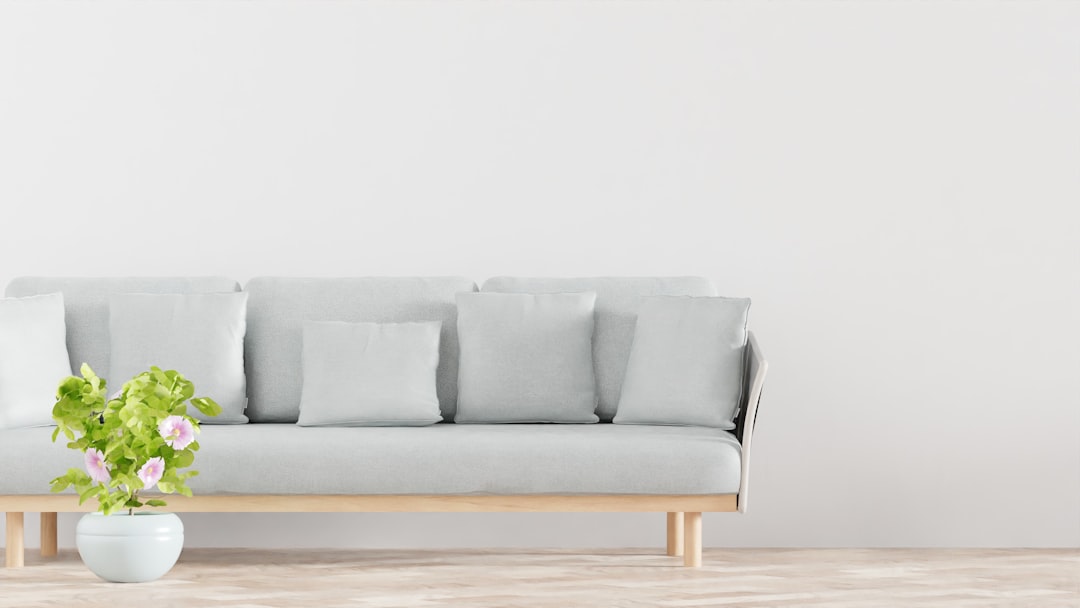
Signs your sofa is overdue for a professional clean
Upholstery rarely looks dramatically dirty before it is genuinely soiled. The signals are subtler:
- A faint but persistent stale or musty odour, even after vacuuming.
- Fabric that feels slightly sticky or oily around areas of heavy contact.
- Visible darkening along seat edges, armrests or the top of the backrest.
- Increased sneezing, itchy eyes or a blocked nose when sitting on the sofa.
- Pet hair that does not vacuum out cleanly, or dander-related odour.
- Cushion filling that feels dense or lumpy in areas of regular use.
If two or more of these apply, the sofa is ready for professional attention. One of them alone, particularly the odour or allergy-symptom indicators, is usually enough.
For further context on how soft furnishings contribute to indoor air quality, our article on smoke damage and why odour lingers in soft furnishings explains the chemistry of why fabric holds smells so persistently, and what actually neutralises them.
For facility managers and commercial clients looking at office chairs, waiting-room seating or hotel soft furnishings, the same principles apply, and the intervals tend to be shorter given daily use by multiple people. Our commercial carpet cleaning service page gives an overview of how we approach regular-maintenance programmes for high-use environments.
Frequently asked questions
How often should I have my sofa professionally cleaned in Singapore?
For a typical Singapore home with no pets and no young children, every 9 to 12 months is a reasonable interval. Add pets or children and that shortens to every 6 months. Allergy sufferers or households with high-traffic dining chairs may need a clean every 3 to 6 months. Singapore's humidity means the standard annual advice from temperate climates falls short here.
Is hot-water extraction safe for my fabric sofa?
For most fabric types, yes. Our technicians adjust the water temperature, extraction pressure and dwell time to the specific fibre: gentler settings for wool, velvet and natural blends, standard settings for nylon and polypropylene. Leather requires a different conditioning process entirely. We always check the manufacturer's care code before starting, and we do not apply any method the fabric cannot handle.
Will a professional clean remove pet odour from my sofa?
In most cases, yes. Hot-water extraction flushes out the organic residue that causes pet odour rather than masking it with fragrance. Results depend on how long the odour has been building up and whether the source has penetrated the cushion filling or the frame. A sofa that has had a pet sleeping on it daily for years may need a second treatment to fully clear the smell, and we will tell you honestly before we start if that is likely.
Can I just use an upholstery spray and leave the sofa to dry?
You can, for light surface freshening. But sprays and foam treatments do not reach the dust mites, allergens and compacted soil that sit in the lower layers of the fabric and padding. They also leave a residue that can attract re-soiling faster than a clean, residue-free surface. For anything beyond a quick refresh, extraction is a more thorough approach.
My sofa looks clean, does it still need professional cleaning?
Usually. Upholstery hides soil well because the fibres trap particles deep in the pile rather than leaving them visible on the surface. A sofa can harbour significant concentrations of dust mites and allergens while looking perfectly presentable. If it has been over 12 months since the last professional clean, and you are in a Singapore home with average humidity, the likelihood is that it is ready for one regardless of how it looks.
Ready to book a professional clean? Contact Big Red Carpet Cleaners for a free, no-obligation quote. Call us on 6241 9443, WhatsApp 9222 9222, or email [email protected]. You can also request a free quote online, we offer same-day and 24/7 service across Singapore.